
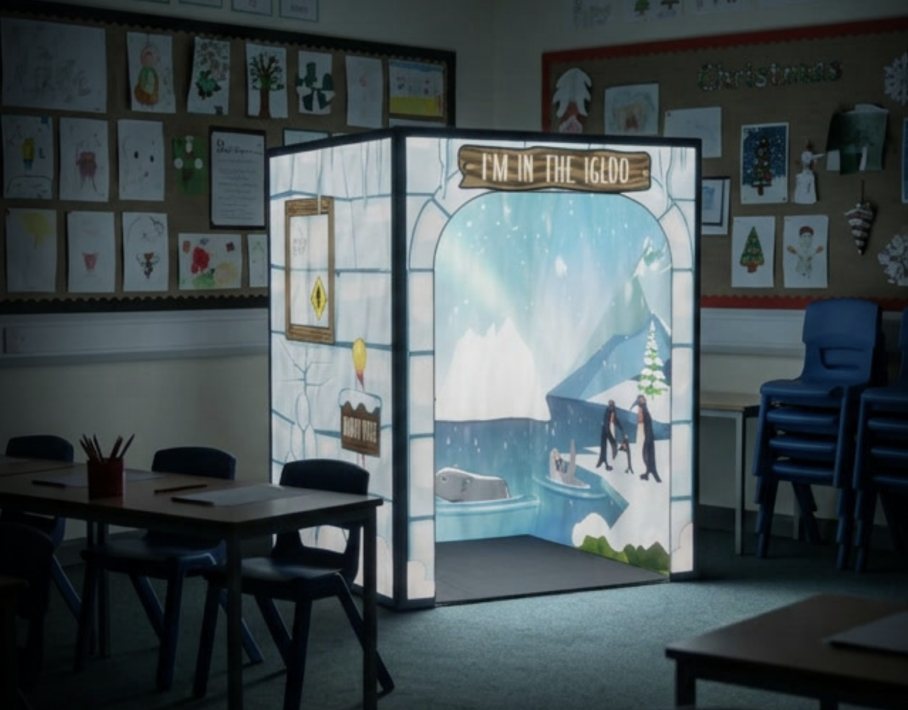
A sensory tent is a small, enclosed play tent designed to soften the sensory input of the room around it. Step inside one and the world gets quieter, dimmer and simpler. Fabric walls muffle household noise, an immersive themed print draws the eye inward, and the enclosed shape gives a child a clear, predictable space that belongs to them.
Parents sometimes call them sensory dens, calm-down tents or quiet corners. The idea is the same: a defined space where a child can retreat, reset and play on their own terms.
How does a sensory tent work?
Children take in the world through their senses all day long, and busy rooms can be a lot to process. A sensory tent works by reducing that input rather than adding to it:
- Enclosure. Four walls and a roof turn an open, distracting room into a small, knowable space.
- Softer sound and light. Fabric walls take the edge off household noise and daylight.
- A themed interior. Prints like galaxies, oceans or jungles give the eye somewhere calm and interesting to rest.
- A clear boundary. The doorway says “this is my space” without anyone needing words.
Nothing inside needs to flash or beep. The tent itself does the work simply by being a quieter place to be.
Who uses a sensory tent?
All sorts of children enjoy one. Toddlers treat them as a hideaway, school-age children use them as a reading den or a place to decompress after a long day, and many families of neurodivergent children find a familiar enclosed space helpful as part of everyday routines at home.
A sensory tent is not a medical product and it does not replace professional support. It is simply a well-designed quiet space, and quiet spaces suit most children more often than you might expect. You can read more in our guide to the benefits of sensory tents.
What should you look for when choosing one?
A few practical things make the difference between a tent that gets used daily and one that gathers dust:
- Pop-up or quick assembly, so it can come out when it is needed and fold away when it is not.
- A theme your child loves, because a space they chose is a space they will actually use.
- A window or opening, so it feels safe and connected rather than closed in.
- Portability, so the same familiar space can travel to grandparents, holidays or a new bedroom.
- Room to grow, enough space inside for a cushion, a few books and a favourite soft toy.
If you are weighing one up against a classic cotton teepee, our sensory tents vs. teepees guide walks through the differences.
How do you introduce one at home?
Keep it low-key. Set the tent up in a quiet corner of a room your child already feels comfortable in, add a soft blanket and one or two familiar things, and leave the door open. Let them discover it rather than directing them into it, and let it be their choice to use.
Once they have claimed it, a few thoughtful additions make it even more inviting. Our guide to what to put in a sensory tent covers lighting, textures and what to leave out.
A simple idea that earns its place
A sensory tent is one of those rare children's things that tends to be used more over time, not less, shifting from hideaway to reading den as your child grows. If you would like to see what one looks like in practice, take a look at our sensory tent range, with themed dens sized for real family rooms.
Explore our sensory spaces
Themed pop-up dens designed for calm, screen-free play at home.